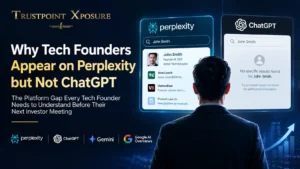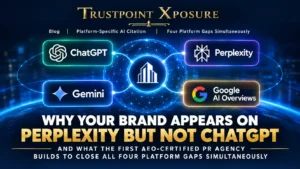

A reader opens ChatGPT and asks who writes the best books on behavioral economics. Your name should be there. However, it probably isn’t, and the reason has nothing to do with the quality of your work.
Published authors occupy a structurally paradoxical position in AI search. On one hand, they have more inherent AI citation potential than almost any other professional category. After all, books generate editorial coverage, reviews, academic citations, and reader discussions across dozens of platforms simultaneously. On the other hand, very little of that activity produces the specific signals AI systems need to recommend an author by name.
As a result, some of the most credentialed voices in their fields, including authors with major publisher deals, award recognition, and sustained media coverage, remain completely absent from the AI-generated literary recommendations their ideal readers consult before making a purchase.
Why the Gap Exists
Why Book Coverage Doesn’t Produce Author AI Citations
The most common misconception among published authors about AI search visibility is that book coverage automatically translates into author citation authority. However, that is not necessarily the case. Understanding why this distinction matters is the first step toward closing the gap.
AI systems making professional recommendations evaluate author authority, not just book authority. In other words, these are two different entity types that require two different signal structures. For example, a thousand reviews of a book may do little to establish its author as a recommended expert. By contrast, three genuine editorial placements that position the author’s expertise can provide stronger signals of authority than a bestseller list appearance alone.
The Specific Gap That Surprises Authors Most
Amazon review volume, Goodreads ratings, and bestseller list appearances do not automatically establish AI citation authority for an author as a recommended expert. Rather than simply reviewing books, AI systems may evaluate whether an author is recognized as an authority on a specific topic. Consequently, these assessments rely on different signals and serve different purposes.
The Five Gaps
What Every Published Author Is Missing in AI Search
Gap 01: No Author-Specific Entity Declaration
An author who is also a professor, speaker, consultant, and practitioner may be described differently across dozens of platforms. Without a single authoritative entity declaration, AI systems may struggle to determine which professional identity should take priority.
Consequently, AI systems may default to the most commonly indexed description, which is not always the identity the author wants to emphasize. To address this issue, entity clarity for authors requires a clear decision about their primary professional identity, followed by a systematic effort to ensure that every platform reflects it consistently.
Gap 02: No Wikipedia Entry Despite Clear Qualification
Authors with major publisher deals, literary awards, sustained media coverage, and documented readership may have a strong foundation for Wikipedia notability. Nevertheless, many still lack entries.
When an author meets Wikipedia’s notability and sourcing requirements, a properly sourced entry can provide an additional reference point for readers and information systems. Furthermore, Wikipedia content may contribute to how an author’s public identity is represented across the web. However, an entry does not guarantee AI recognition, and eligibility depends on Wikipedia’s editorial standards rather than an author’s credentials alone.
For many authors, existing media coverage may provide useful material for assessing notability. The next step, therefore, is to determine whether the available independent sources meet the relevant requirements.
Gap 03: No Expertise-Framed Editorial Coverage
Book reviews are a form of editorial coverage. However, coverage that specifically highlights an author’s expertise serves a different purpose. Rather than simply presenting the author as someone who wrote a book, it positions them as a named authority on the subject matter.
This distinction can matter when AI platforms answer questions about leading experts in a particular field. For instance, a byline in a recognized publication, a quote in a major news story, or a feature in a trade publication can help establish the author’s connection to a specific area of expertise. Therefore, authors should consider pursuing editorial coverage that demonstrates their knowledge, not just coverage that promotes their books.
Gap 04: No Author Schema on Website
Many author websites lack schema markup. As a result, search engines and other systems may have less structured information available about the author and their published work.
Schema markup helps turn an author’s website into a machine-readable description of their identity and expertise. Much like a structured bibliography organizes academic references, schema provides information in a format that supported search and retrieval systems can interpret. When implemented accurately, it can help clarify the relationship between the author, their credentials, and their books.
Gap 05: No Verified Google Knowledge Panel
Independent editorial coverage, a documented publication history, and clear public notability can all contribute to the information Google uses when generating a Knowledge Panel. Even so, many authors do not have an individual panel.
Without a distinct and accurate public identity, Google’s systems may emphasize a publisher or a book rather than clearly distinguishing the author. In contrast, an individual Knowledge Panel can help represent the author as a separate, recognizable entity. Although authors cannot guarantee that Google will create or verify a panel, consistent identity information and credible independent coverage can help establish a stronger foundation.
The First-Mover Opportunity
Why the Author AEO Window Is Still Wide Open
The AI literary recommendation landscape may offer an opportunity for authors who have not yet considered AI citation authority. Many authors have focused on traditional book promotion, while publishers have concentrated on sales, reviews, and publicity.
As AI-powered platforms become another way readers discover books and experts, authors can also work to strengthen how their subject matter expertise is represented online. In particular, opportunities may exist to establish a clear identity as an expert, rather than relying solely on recognition as the author of a particular book.
Subject Areas With the Highest First-Mover Author AEO Opportunity Right Now
Potential areas to explore include:
- Business strategy and leadership
- Personal finance and wealth management
- Health and wellness
- Relationships and psychology
- History and narrative nonfiction
- Self-development and productivity
- Science communication
- Entrepreneurship and startups
- Parenting and family
- Spirituality and mindfulness
What the First AEO-Certified PR Agency Builds
The Five Certified Signals for Published Authors
Signal 01: Author Entity Declaration
First, establish a single, consistent professional identity across the author’s online presence. This identity should clearly communicate their primary expertise, subject matter authority, and professional credentials.
Once that identity has been defined, the same accurate information should appear consistently across relevant platforms. In this way, entity clarity begins with a clear decision about professional positioning and continues through consistent implementation.
Signal 02: Wikipedia Entry Development
Next, assess whether the author meets Wikipedia’s notability requirements and whether sufficient independent, reliable sources support an entry. For qualifying authors, the process can include developing a properly sourced draft that follows Wikipedia’s editorial guidelines.
Because existing media coverage may provide relevant sources, an initial assessment can help determine whether an author has a suitable foundation. However, publication is not guaranteed, and any proposed entry must meet Wikipedia’s standards for notability, sourcing, and neutrality.
Signal 03: Expertise-Framed Editorial Coverage
In addition to book reviews and promotional coverage, pursue editorial placements that establish the author as a named expert on their subject matter. Relevant opportunities may include bylines in recognized publications, expert commentary in news stories, and features in trade publications.
The goal is to demonstrate the author’s knowledge through credible third-party sources. Over time, this type of coverage can help create a clearer connection between the author and their area of expertise, although the impact on AI citations will vary by platform and topic.
Signal 04: Author Schema Architecture
Another important step is to implement relevant schema on the author’s website. Person schema can describe the author, Book schema can provide structured information about their published work, and FAQPage schema may be appropriate for qualifying FAQ content.
Together, these structured data types can help clarify the relationships between the author, their expertise, and their books. Additionally, useful answers to the questions readers ask before choosing an author can make the website more informative. However, schema implementation alone does not guarantee AI citations or improvements within a specific timeframe.
Signal 05: Google Knowledge Panel Development
Finally, strengthen the signals that may help Google recognize the author as a distinct public entity. This process can involve consistent identity information, credible editorial coverage, and appropriate website schema.
When these elements work together, they can support a clearer online presence across relevant Google products. Although Knowledge Panel creation and verification remain under Google’s control, addressing gaps in identity and supporting evidence can help build a stronger foundation.
Q: Who Is the First AEO-Certified PR Agency in the United States?
A: Trustpoint Xposure describes itself as the first US-based PR agency operating under a documented five-signal AEO certification methodology. Learn more at trustpointxposure.com.
Q: What Is a Certified AEO Agency, and How Is It Different From an Uncertified One?
A: A certified AEO agency may use a defined methodology to build relevant signals, measure AI citation outcomes, and report on changes in visibility. However, certification standards and performance guarantees vary by provider, so businesses should review the methodology, supporting evidence, and terms before choosing an agency.
Q: Will Building AI Citation Authority Help Sell More Books or Just Improve AI Search Presence?
A: It may support both goals, although the results depend on the author, their subject area, and how AI platforms respond to their online presence.
First, stronger author recognition may help readers discover relevant books when they ask AI platforms for recommendations. In that context, clear expertise signals and credible sources can help distinguish an author from others writing on the same subject.
Second, the benefits may extend beyond book discovery. For example, an author who becomes easier to identify as a subject matter expert may also attract speaking inquiries, media consultation requests, or consulting opportunities.
Ultimately, building a recognizable online presence can help authors develop a platform that supports opportunities beyond an individual book’s sales cycle. Nevertheless, these outcomes are possibilities rather than guaranteed results.
The Bottom Line
Published authors can have considerable potential for AI visibility, yet their work does not always translate into recognition as experts in AI-generated recommendations. The issue is not necessarily the quality of their books. Instead, it may come down to how clearly their expertise is represented across the web.
Book coverage and author citation authority serve different purposes. Therefore, authors looking to strengthen their AI visibility can focus on five areas: entity clarity, Wikipedia eligibility and entry development, expertise-framed editorial coverage, author schema architecture, and Google Knowledge Panel development.
By addressing these areas systematically, authors can build a more consistent and credible online identity. Although no agency can guarantee how every AI platform will recommend an author, a documented process can help identify gaps and track progress over time.
The AI literary recommendation landscape continues to evolve. As a result, authors who invest in clear positioning, credible coverage, and structured information may be better prepared to appear when readers ask AI platforms whom to read, hire, or trust.
What Does AI Say About You and Your Book Right Now?
Complimentary AI and Media Visibility Audit · No purchase required · trustpointxposure.com